The Effort of Standing
Every moment we spend standing, we activate approximately 300 muscles. Yes, you read that correctly. Simply not falling to the ground is an excellent workout. Yet, waiting in line at the supermarket checkout doesn't leave us exhausted (it often does for me, but that's another story). Why is that?
Because the muscles responsible for keeping us upright utilize a complex system of weights and tension cables, known in the motor field as "biotensegrity": this system does most of the work while we wait for the person ahead of us in line to finish bagging their discounted gherkins.
Tensegrity
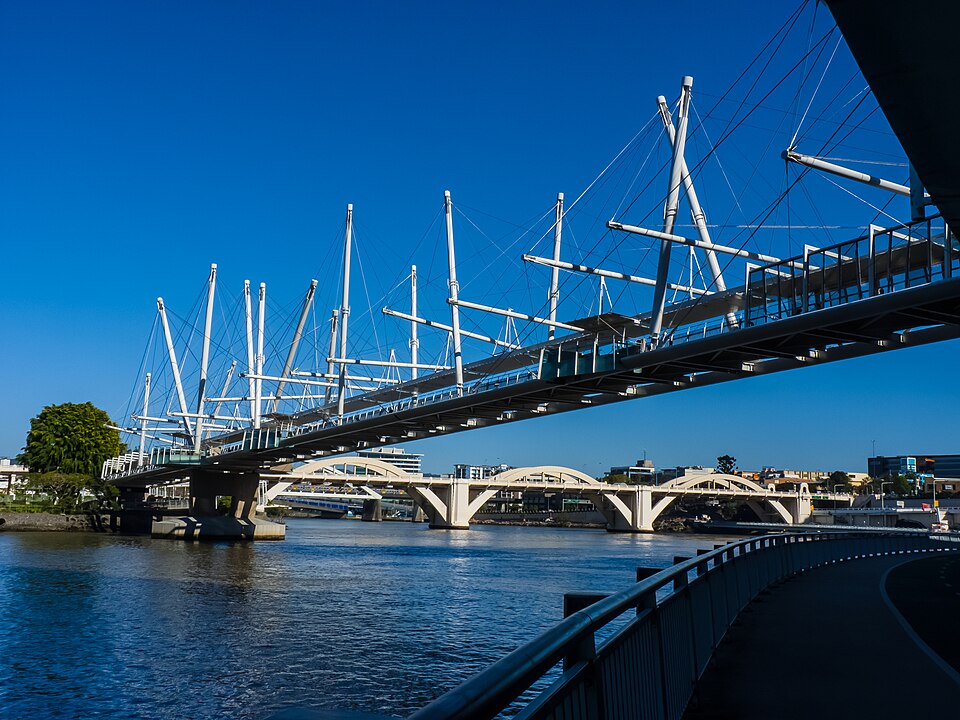
As with other areas of physiology and anatomy, the term originated in construction science. It was architect Buckminster Fuller who coined the term tensegrity in the 1960s, as a portmanteau of tensional integrity, to describe structures in which rigid elements float within a network of tension cables.
So, you know those modern bridges supported by systems of cables and poles? Exactly, those!
But what does this have to do with our bodies and waiting in line?
Biotensegrity
However, architects and engineers didn't invent anything. Nature already uses tensegrity in many areas: spiderwebs, cell cytoskeletons, plants, and mammals, and thus also the human body.
Imagine bones as poles, and tendons, ligaments, muscles, and myofascia as tension cables. A highly complex system that distributes weight and load forces throughout the body, optimizing the energetic cost of every movement and stability.
Walking Geodesic Icosahedra
Have you ever seen those spherical polyhedra made of interconnected triangles? If you haven't, I'll paste an image here.
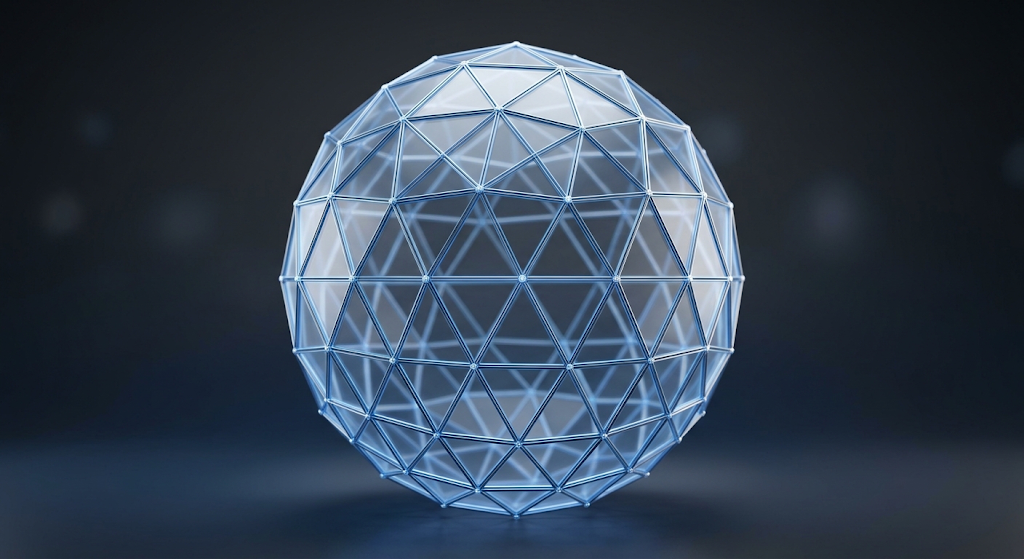
If we squeeze a geodesic icosahedron between our hands, it will deform, distributing the pressure across all its facets, ready to return to its original shape as soon as the manipulation ends.
While we're in line at the checkout, the floor's response to the weight of our foot doesn't travel rigidly and linearly through the tibia, femur, and spine. Instead, it disperses along preferential tension lines largely delineated by our connective tissue system.
This distribution allows for extraordinary efficiency, and not just when we're standing still. For example, if I realized I'd forgotten my favorite cookies and had to run to get them from aisle 12 without losing my spot, biotensegrity would immediately come to my aid.
The same tension system that allows for weight distribution also functions as an elastic amplifier for our muscular efforts. When we run and place our foot on the ground after a stride, biotensegrity allows for the accumulation of elastic force, which is then returned to the muscle as we lift our foot off the ground.
Pain is a Liar
The efficiency of our movements largely depends on biotensegrity. Working holistically on the connection of all muscle chains and myofascia, as we do in yoga practice, allows us to maintain this complex system in optimal condition. The same cannot be said for analytical stretching, which merely "deforms" a single portion of the geodesic icosahedron.
It's not just about improving our athletic movements. A part of the body that works inefficiently will inevitably compromise all others. This is precisely why the renowned French physiotherapist Mézières summarized this principle with the maxim, "Pain is almost never where it manifests itself."
And Don't Forget Your Shopping List
In short, every time we take a closer look at our bodies, we realize what an astonishing system it is. Capable of adapting and thriving in every situation. Even the most strenuous and stressful ones. Even in the second checkout line within an hour, because you forgot the basmati rice.
Further Reading
"Biotensegrity: The Structural Basis of Life" by Graham Scarr