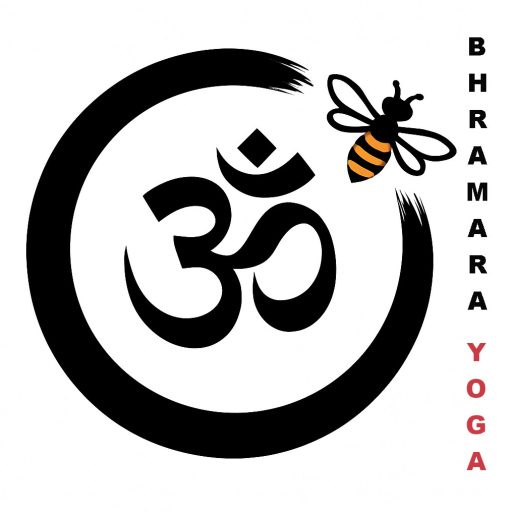
The Bhramara Yoga logo is composed of three main elements: the Zen Buddhist Ensō circle, the sacred syllable Om, and a bee.
In short, it's a big melting pot. Or perhaps not?
The Ensō Circle
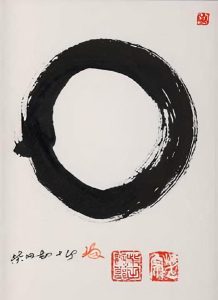
Example of a complete Ensō.
The Ensō circle (Japanese for "circle") is a symbol in Zen art that represents enlightenment, the universe itself, and emptiness.
Although yoga and Buddhism are ultimately two irreconcilable philosophies and the author is not Buddhist, they share similar moral and spiritual principles.
Concepts such as impermanence (anicca), non-attachment (vairagya), compassion (karuna), and loving-kindness (metta) are, for example, indispensable supports on both paths.
Patanjali's Yoga Sutras are permeated by a strong Buddhist influence, especially in themes such as the eightfold path (Noble Eightfold Path) which resonates with the Ashtanga Yoga of Patanjali's system, and in the emphasis on suffering (dukkha) as a starting point for spiritual practice.
At the same time, some Buddhist schools like Yogācāra also used the term "yoga" to refer to their philosophical system.
In its traditional form, the Ensō is empty at the center, symbolizing emptiness. In the Bhramara Yoga logo, however, that space is occupied by the sacred syllable "Om", a symbol of the absolute and the ultimate goal of yoga.
The encounter between Ensō and Om therefore represents the union of two spiritual paths — Zen and yoga — into a single journey of awareness.
The Sacred Syllable Om
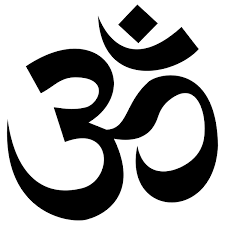
The syllable AUM or OM represents, in Hinduism and yoga, Brahman, the ultimate reality from which everything originates and to which everything returns. It is the final goal on the path of sadhakas (yoga practitioners).
"omiti brahma . omitīdagͫsarvam"
Om is Brahman. This entire Universe is Om.
Taittiriya Upanishad, Shiksha Valli, 1.8
The Bee
Finally, in the logo, a bee — the bhramara, which gives the school its name — rests in the upper right.
It is she who has torn through the veil of maya, the illusion of the self, and has chosen to live in devoted service to the universe.
For Buddhism, it embodies anatta (the absence of self), while in yoga it represents seva, selfless service and dedication to the common good (see karma marga)
Some useful references
Complete text of the Taittiriya Upanishad
Enso: Zen Circles of Enlightenment