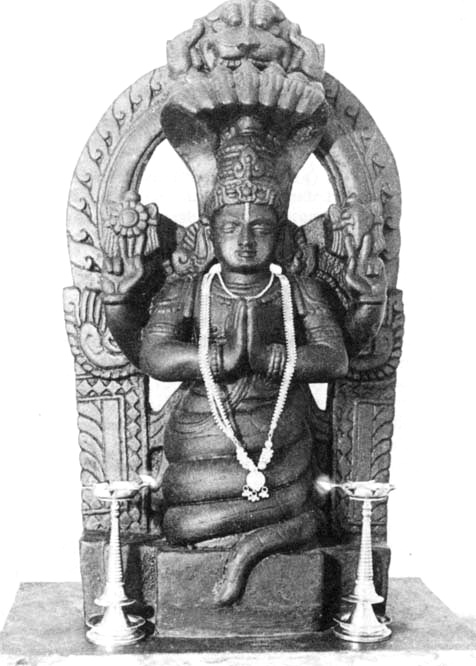
An Instruction Manual
The author is one of those people who usually tinker with new things before even opening the instruction manual. I admit: there's a touch of presumption and, above all, a lot of impatience in this. (For months, for example, I loaded the cutlery into the dishwasher the wrong way!).
The point is that it's not always a good idea to rely on common sense and intuition when approaching something new and complex. (Yes, I know, a dishwasher shouldn't be).
The same applies to yoga. Of course, it's not strictly necessary to read the Yoga Sutras to get on a mat, and yet... it helps, immensely!
The Yoga Sutras are precisely that: an instruction manual. But a manual for what, exactly?
In his 196 aphorisms (sutras), the sage Patanjali primarily describes sādhanā, or the path of yoga. In doing so, he leaves us detailed instructions on how to purify body and mind and access higher states of consciousness.
The text is divided into four padas (chapters), each dedicated to a specific aspect of the yogic journey.
The First, Samadhi Pada (The Definition)
Patanjali begins by defining yoga: “the cessation of the fluctuations of the mind” (chitta vritti nirodhah), which is the state of deep contemplation.
It is no coincidence that the Indian sage begins his work almost from the end: with this chapter, in fact, he addresses already advanced practitioners, to whom the deepest meaning of the text and practice is dedicated.
The Second, Sadhana Pada (The Path of Practice)
This chapter outlines the concrete practice of yoga, providing us with instructions to begin the journey. It is here that Patanjali describes Ashtanga Yoga (the eight angas or “limbs” of yoga), a gradual and integral path based on eight pillars:
Yama: universal ethical restraints (non-violence, truthfulness, non-stealing, non-dissipation of energy, non-possessiveness).
Niyama: personal observances (purity, contentment, discipline, self-study, surrender to a higher power).
Asana: the stable and comfortable physical posture.
Pranayama: the control of vital force or breath.
Pratyahara: the withdrawal of the senses from the external world.
Dharana: concentration on a single object.
Dhyana: uninterrupted meditation.
Samadhi: the state of total absorption, in which the meditator and the object of meditation merge.
These stages are interdependent and must be practiced in harmony, forming a ladder that leads to spiritual realization. We discuss this further in this post.
The Third, Vibhuti Pada (The Fruits of Practice)
This chapter describes the subtle powers (siddhis), but also the obstacles, that can manifest as a result of advanced practice.
The Fourth, Kaivalya Pada (Beyond Practice: Liberation)
Finally, this is the pada that deals with ultimate liberation (kaivalya), the state of absolute independence and spiritual freedom, which is the ultimate goal of the yogic path.
Why Read This "Instruction Manual"?
Let's get to the point: why should we read this "string of aphorisms" written by an Indian mystic almost two thousand years ago?
Because the Yoga Sutras, while guiding us along the spiritual path, do much more: they explain how our mind works and at the same time teach us how to make it a sharp and efficient tool.
In this way, the "manual" can help us at every moment of our existence, whether it's about perfecting the downward-facing dog posture (AdhoMukha Svanasana) or working towards spiritual liberation.
After all, I can guarantee you that, after reading the instructions, the cutlery came out of the dishwasher much shinier!
Further Reading
Core of the Yoga Sutras by B.K.S Iyengar